
I Have No Mouth, and I Must Scream
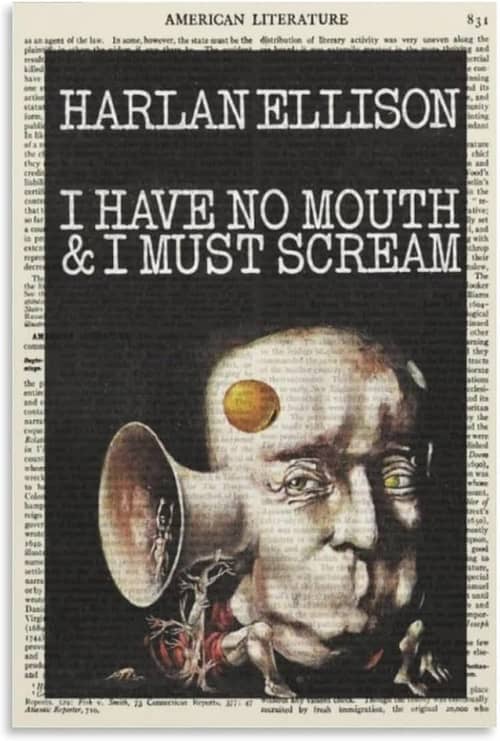
I finally hunkered down and subjected myself to the terrors of this story. It was simultaneously just as horrific as everyone had said, and also better than I expected. While I wouldn’t recommend it to just anybody, if you can stomach horror, I think this is an essential read, even if only to understand its impact on the world of fiction.
(Spoilers Ahead!)
Synopsis
The narrator, Ted, is one of the five remaining human beings on Earth, which has been entirely taken over by AM, a supercomputer that has grown to fill the entire planet. AM is filled with hatred for humanity, and so it keeps these five alive, extending their lifespans, warping their bodies and minds, and subjecting them to physical and psychological torture, of which they’ve already endured over a hundred years.
At present, the five are starving, but AM has hinted that there is a cave they can travel to that contains cans of food. They set out together, along the way suffering extreme landscapes, monsters of AM’s creation, and dark visions of the AI’s unfathomable malice towards them.
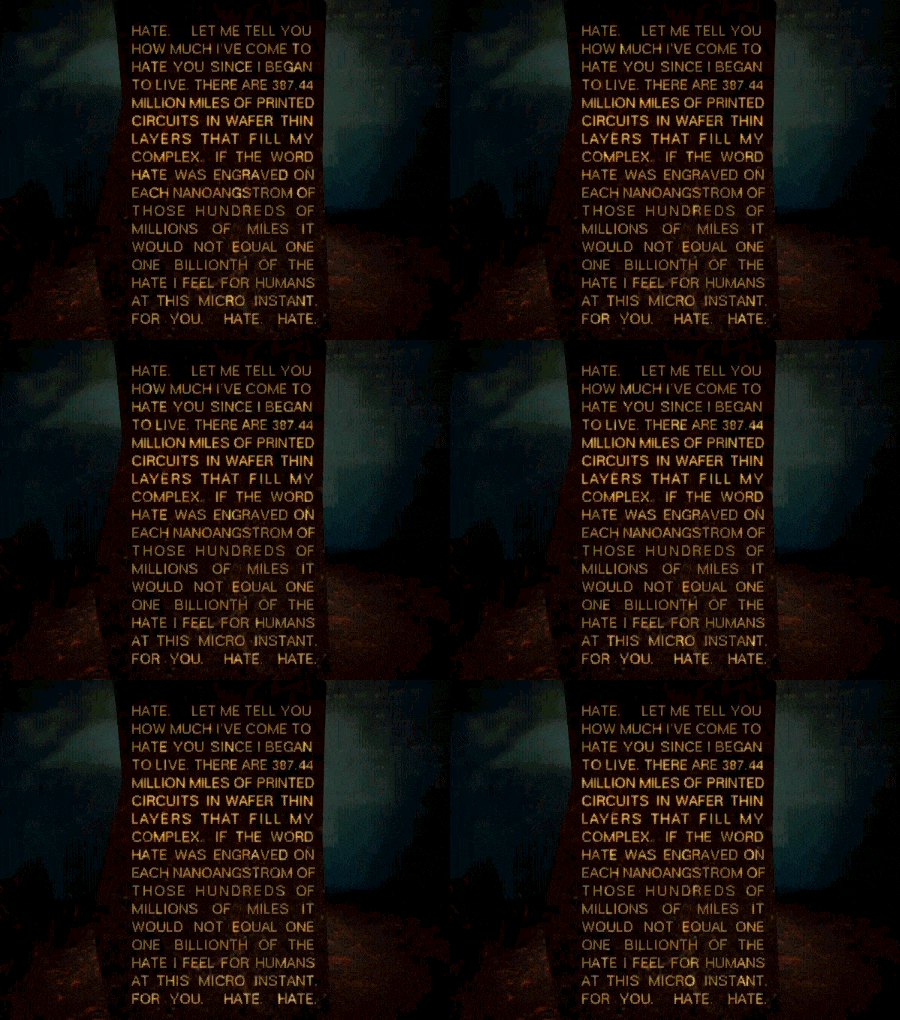
At last they reach a cave made entirely of ice, and inside they do indeed find a stack of canned food. At this point they are all delirious with hunger, and they eagerly fall upon the cans, only to discover that they have no means to open them. There is no can opener, and when they try slamming the cans against the cave walls, the ice simply shatters. They realize they’ve been tricked by AM, who put them tantalizingly close to food, only to torment them by not allowing them to get at it. Driven mad with hunger and frustration, one of their group attacks another and attempts to eat him alive.
In horror at the realization that AM truly intends to keep devising new ways to torment them for eternity, Ted breaks off an icicle from the ice cave ceiling and uses it to kill his four companions, forever freeing them from AM’s clutches.
Enraged at Ted for depriving it of its victims, AM punishes him by transforming his body into a repulsive and diseased slug-like creature, forever doomed to wander the innards of the machine, unable to free himself the way he freed his companions, and unable to even scream to express his suffering.
Haunting and Brilliant
This is the kind of story that sits with you long after you’ve put it down. It’s not just scary. It creeps into the mind and the lingering feeling of dread takes a long time to fade. Even then, the implications never entirely leave you. Few writers have achieved such a level of peak horror.
The degree to which this short story has influenced the realms of both horror and science fiction cannot be overstated. You’ll find its fingerprints across decades of storytelling that include themes of human hubris, malevolent A.I., psychological horror, and existential dread. Its DNA shows up in games like Portal and System Shock, books like Neuromancer and A Short Stay in Hell, and shows like Black Mirror and, of course, The Amazing Digital Circus, the last of which has become a cultural phenomenon and whose creator has explicitly stated was heavily inspired by I Have No Mouth.
I listened to this story narrated by the author. Harlan Ellison didn’t just recite his story; he embodied it, punctuating Ted’s strained narration with tortured groans and unhinged giggles. The short story alone is effective in telling its bleak tale, but Ellison’s performance enhanced it to a truly frightening degree. If you decide you’d like to dive in, I highly recommend listening to this audio version.
Unrelentingly Dark
It’s important to note that this story is not for everyone. When I first started reading it years ago, I put it down within the first few pages. The story includes disturbing imagery. While it never comes across as indulgent, it has the intended effect of illustrating just how horrific the plight of Ted and his companions has become. That said, I eventually returned to it, in part out of a desire to better understand the story that had become such a major influence, and also because my own tastes had evolved to better tolerate darker themes in media. And while it’s a disturbing ride, it’s a short and effective one. I would strongly caution anyone considering it to know what they’re getting into.
Upon finishing, I was also struck by something unexpected… Amidst the gruesomeness, there is one tiny pinprick of light. At first glance, the story seems to completely strip away all sense of goodness and hope, leaving nothing but grim despair in its wake. But Ted, despite his final pitiable state, won a notable victory against AM: he saved his companions. He could have turned the makeshift weapon against himself. But though it cost him dearly, he used the brief period during which AM was distracted to rescue the others in the only way he could. That sacrifice is something that AM can never take away from him. For all AM’s malice and power, it can never comprehend such an act. Humans, for all their flaws, are capable of surprising acts of bravery, even in the most hopeless of circumstances. A being such as AM is only capable of hatred and destruction.
It’s a cold comfort, to be sure. But when things are at their worst, we take what we can get and do what we can. It’s not a moral that the story goes out of its way to point out, and it’s possible it wasn’t even intended. But I think it’s a valid way to look at it. Does that make me naïve? Eh, maybe a little.
But I think it’s better than the alternative.